Montgomery County Auditor Tax Calculator provides a simple way to estimate local property taxes using current assessment data and levy rates. Property taxes in Montgomery County fund schools, law enforcement, road maintenance, and other public services. Each parcel receives an assessed value, and tax rates vary by school district and municipality. For that reason, a clear property tax estimate helps buyers and homeowners plan housing costs with more accuracy. Real estate taxes often form a large part of monthly expenses, so early calculation supports stronger financial decisions.
Homebuyers, sellers, and investors rely on accurate county tax calculation tools before making commitments. A dependable tax estimation tool shows how assessed value, millage rates, and exemptions affect yearly totals. The Montgomery County Auditor Tax Calculator makes this process simple and user-friendly, even for first-time buyers. It helps compare properties across districts and project future payments with greater clarity. With the right estimate, property owners can plan budgets, evaluate affordability, and move forward with confidence.
What is the Montgomery County Auditor Tax Calculator?
The Montgomery County Auditor Tax Calculator is an official online property tax estimator provided by the county auditor’s office. It helps homeowners and buyers estimate annual property taxes using assessed value and current millage rates. The calculator serves as a public Montgomery County Auditor tool that pulls data from official tax records. It gives a reliable estimate based on the property’s assessed value, local millage rates, and applicable levies. Since the information comes directly from county records, users receive figures grounded in real assessment data rather than rough averages.
How the Official Property Tax Calculator Works
The Montgomery County Auditor Tax Calculator uses a simple formula:
Assessed Value × Total Millage Rate = Estimated Property Tax
In many Ohio counties, residential property is assessed at 35% of market value. The calculator automatically applies the correct assessment ratio and combines it with local tax rates for schools, municipalities, townships, and special districts.
Users typically enter:
- Parcel number or property address
- Assessed property value
- Tax district information
The system then calculates:
- Gross tax amount
- Possible tax reductions or credits
- Estimated net annual tax
Why Homeowners and Buyers Use This County Auditor Tool
Accurate tax estimates play a major role in real estate decisions. Mortgage lenders factor property taxes into monthly escrow payments. Buyers compare tax burdens across neighborhoods. Current owners review tax impacts after reappraisal years.
Key benefits include:
- Reliable data source from the official county auditor
- Real-time figures based on updated millage rates
- Transparency in how local levies affect tax bills
- Quick projections before refinancing or selling
Reliability and Official Data Source
The calculator relies on data published by the Montgomery County Auditor’s Office. That means the property tax calculator aligns with current assessment rolls and voter-approved levies. County auditors update assessed values during reappraisal cycles. They also apply tax reduction factors set under Ohio law. As a result, this online property tax calculator mirrors the same figures used to generate official tax bills.
Steps to Using the Montgomery County Auditor Tax Calculator
The Montgomery County Auditor Tax Calculator helps property owners generate an accurate property tax estimate using official assessment data from Montgomery County Auditor’s Office. By following the steps below, users can search a parcel, review tax details, and complete a clear stepwise tax computation for budgeting or purchase planning.
Navigate to the Official Tax Calculator Page
Open your web browser and type: http://www.mcauditor.org
Once the homepage loads:
- Click Property Search or Real Estate Search.
- This will redirect you to the parcel lookup system.
- The tax estimator is usually available inside the property record page rather than as a separate homepage button.
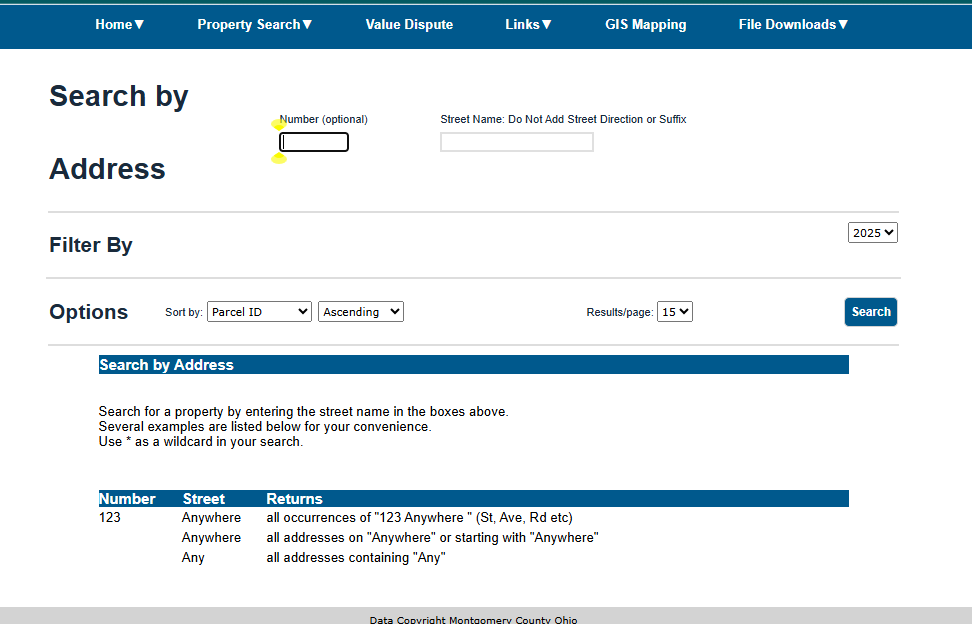
Search for the Property
To use the tax calculator, you must first locate the property.
You can search by:
- Property Address (house number + street name)
- Owner Name
- Parcel Number (from tax bill or deed)
Enter the information in the search field and click Search.
A results list will appear. Click the correct parcel to open the Property Details Page.
This page contains:
- Market Value
- Assessed Value
- Tax District
- Property Class
- Current Tax Information
Input or Confirm Assessed Value and Exemptions
On the Property Details page, scroll to the Tax Information section.
Here you will see:
- Assessed Property Value
- Owner-Occupancy Credit
- Homestead Exemption (if applicable)
- Tax Year Data
The Montgomery County Auditor Tax Calculator uses the assessed value as the base for calculation. In Ohio, residential property is typically assessed at 35% of market value. If the tax estimator opens automatically, these values will already be filled in. If manual entry is required, copy the assessed value into the calculator field.
Select Millage Rates or Confirm Tax District
The system automatically applies millage rates based on the selected tax district.
Millage rates fund:
- Local School District
- County Services
- City or Township Services
- Special Levies
Calculate the Property Tax Estimate
Click the Calculate or Estimate Tax button.
The tool will display:
- Gross Annual Tax
- Reduction Factors
- Credits Applied
- Net Estimated Tax Liability
Basic Formula Used:
Assessed Value × Total Millage Rate = Estimated Property Tax
Many results show:
- First Half Payment
- Second Half Payment
- Total Annual Obligation
Interpret the Results for Budgeting
Use the final amount for:
- Mortgage escrow planning
- Comparing neighborhoods before buying
- Checking impact of reassessment
- Financial forecasting
Example Breakdown:
| Item | Amount |
|---|---|
| Gross Tax | $X,XXX |
| Credits | $XXX |
| Net Annual Tax | $X,XXX |
Key Factors Affecting Property Taxes
Property taxes in Montgomery County depend on three primary elements: Assessed Value, Millage Rate, and Tax Liability. These components work together to determine how much a homeowner pays each year. When one factor changes, the final tax amount can increase or decrease. Knowing how each part functions makes budgeting easier and helps property owners plan ahead. Buyers can also compare tax burdens more confidently before making a purchase decision.
Assessed Value
The Assessed Value is the taxable portion of a property’s worth determined by the Montgomery County Auditor’s Office. The county conducts reappraisal and update cycles to reflect current property valuation trends. In Ohio, residential property is generally assessed at 35% of market value. Market value reflects what the property would likely sell for, but assessed value is the amount used to calculate taxes. If market prices rise in a neighborhood, assessed values usually increase during the next reassessment cycle. That increase directly impacts taxable property value and future tax bills.
Key Points About Assessed Value:
- Based on periodic county reappraisal
- Typically 35% of market value for residential property
- Changes after reassessment cycles
- Forms the base of tax computation
Example Calculation:
| Market Value | Assessment Rate | Assessed Value |
|---|---|---|
| $250,000 | 35% | $87,500 |
| $300,000 | 35% | $105,000 |
Millage Rate
The Millage Rate represents the tax rate applied to the assessed value. One mill equals $1 of tax per $1,000 of assessed value. Each property belongs to a specific tax district, and that district determines the combined millage rate. Local voters approve levies that fund public services. As a result, rates vary between cities and school districts within the same county. Even similar homes may have different tax bills if they sit in different tax districts.
Millage Rate Includes:
- County levies
- City or township services
- School district funding
- Special improvement levies
Sample Impact of Millage Rate:
| Assessed Value | Millage Rate | Estimated Tax |
|---|---|---|
| $87,500 | 65 mills | $5,687.50 |
| $87,500 | 75 mills | $6,562.50 |
Tax Liability
Tax Liability is the final amount a property owner owes annually. It results from multiplying assessed value by the total millage rate. This formula forms the foundation of stepwise tax computation used by the county. After calculating the gross amount, certain credits or exemptions may reduce the total. These adjustments lower the actual amount paid without altering the property’s market value. Reviewing available exemptions each year can prevent overpayment.
Basic Formula:
Assessed Value × Millage Rate = Estimated Tax Liability
Possible Reductions:
- Owner-occupancy credit
- Homestead exemption
- State-mandated reduction factors
Example with Credit Applied:
| Gross Tax | Exemption | Net Tax Liability |
|---|---|---|
| $6,000 | $800 | $5,200 |
How to Estimate Your Property Tax Without the Calculator
A homeowner can create a property tax estimate manually using a simple formula based on assessed value and millage rate. By applying the standard property levy formula, anyone can estimate taxes without using an online calculator. Manual calculation works well when reviewing listings, planning a purchase, or double-checking annual tax bills. The process relies on two key numbers: Assessed Value and Millage Rate. These figures are available through the Montgomery County Auditor’s Office property records, similar to how a jail inmate search provides specific, accessible information when needed.
Use the Standard Property Levy Formula
The formula used in Ohio property taxation is:
Assessed Value × Millage Rate ÷ 1,000 = Tax Liability
Since one mill equals $1 per $1,000 of assessed value, dividing by 1,000 converts mills into dollars.
Single-Family Home
| Detail | Amount |
|---|---|
| Market Value | $250,000 |
| Assessment Rate (35%) | $87,500 |
| Millage Rate | 70 mills |
Calculation:
87,500 × 70 ÷ 1,000 = $6,125 annual tax
Condominium
| Detail | Amount |
|---|---|
| Market Value | $180,000 |
| Assessed Value (35%) | $63,000 |
| Millage Rate | 65 mills |
Calculation:
63,000 × 65 ÷ 1,000 = $4,095 annual tax
Rental or Investment Property
| Detail | Amount |
|---|---|
| Market Value | $320,000 |
| Assessed Value (35%) | $112,000 |
| Millage Rate | 75 mills |
Calculation:
112,000 × 75 ÷ 1,000 = $8,400 annual tax
Adjusting for Exemptions and Credits
After calculating gross tax liability, subtract any eligible reductions.
Common adjustments include:
- Owner-occupancy credit
- Homestead exemption (senior or disability)
- State reduction factors
Example with credit:
| Gross Tax | Credit | Net Tax |
|---|---|---|
| $6,125 | $500 | $5,625 |
Frequently Asked Questions
Property owners often look for clear answers about assessed value, millage rate, and overall tax liability. These frequently asked questions explain how property taxes work and how to generate a reliable property tax estimate using official data from the Montgomery County Auditor’s Office. Each answer below provides detailed local tax info to help homeowners plan with confidence.
What is the difference between assessed value and market value?
Market value represents the price a property would likely sell for in an open and competitive real estate market. Assessed value, on the other hand, is the portion of that market value used for tax purposes. In Ohio, residential properties are generally assessed at 35% of market value. The county auditor determines this value during scheduled reappraisal and update cycles. Property tax bills rely on assessed value rather than the full market price, which explains why taxes are lower than a home’s total sale value. When market conditions shift, assessed values may change during the next reassessment period.
How is my property tax liability calculated?
Tax liability is calculated using a simple property levy formula: Assessed Value × Millage Rate ÷ 1,000. The assessed value serves as the taxable base, and the millage rate reflects the combined local tax rate for your district. One mill equals $1 per $1,000 of assessed value. After multiplying and dividing, the result shows the gross annual property tax. Any eligible credits or reduction factors are then subtracted to determine the final amount owed. This same formula is used by the county to generate official tax bills.
How often are property values reassessed in Montgomery County?
Montgomery County follows a regular reassessment schedule. A full reappraisal occurs every six years, and a value update takes place at the three-year midpoint. During these cycles, the auditor reviews market sales data, neighborhood trends, and property characteristics. If real estate prices increase, assessed values may rise as well. If the market declines, values can decrease. These adjustments directly affect future property tax estimates and annual tax liability.
Can exemptions reduce my property tax estimate?
Yes, certain exemptions and credits may lower your final tax liability. Programs such as the owner-occupancy credit and homestead exemption for seniors or disabled homeowners reduce the amount of taxes owed. These reductions apply after the initial tax calculation based on assessed value and millage rate. Eligibility requirements must be met, and homeowners need to file the proper application with the county auditor. Buyers should confirm whether existing exemptions remain valid after purchasing a property.
How accurate is the Montgomery County Auditor Tax Calculator?
The Montgomery County Auditor Tax Calculator uses official assessment records and current millage rates from county data. It applies the same formula used to determine tax liability on annual tax bills. The estimate is highly reliable when the correct parcel information is selected and exemptions are accurately included. Since millage rates and assessed values may change over time, results reflect the most recent available data. Although it provides an estimate rather than a final statement, it closely matches the actual billed amount.
Where can I find the millage rate for my property?
Millage rates are available on the property detail page within the county auditor’s website. Each parcel belongs to a specific tax district, which determines the total combined rate applied to the assessed value. That total includes school district funding, county services, municipal services, and voter-approved levies. Reviewing your assigned tax district ensures that any manual property tax estimate is accurate. Checking this information annually helps track changes in local levies or newly approved funding measures.